
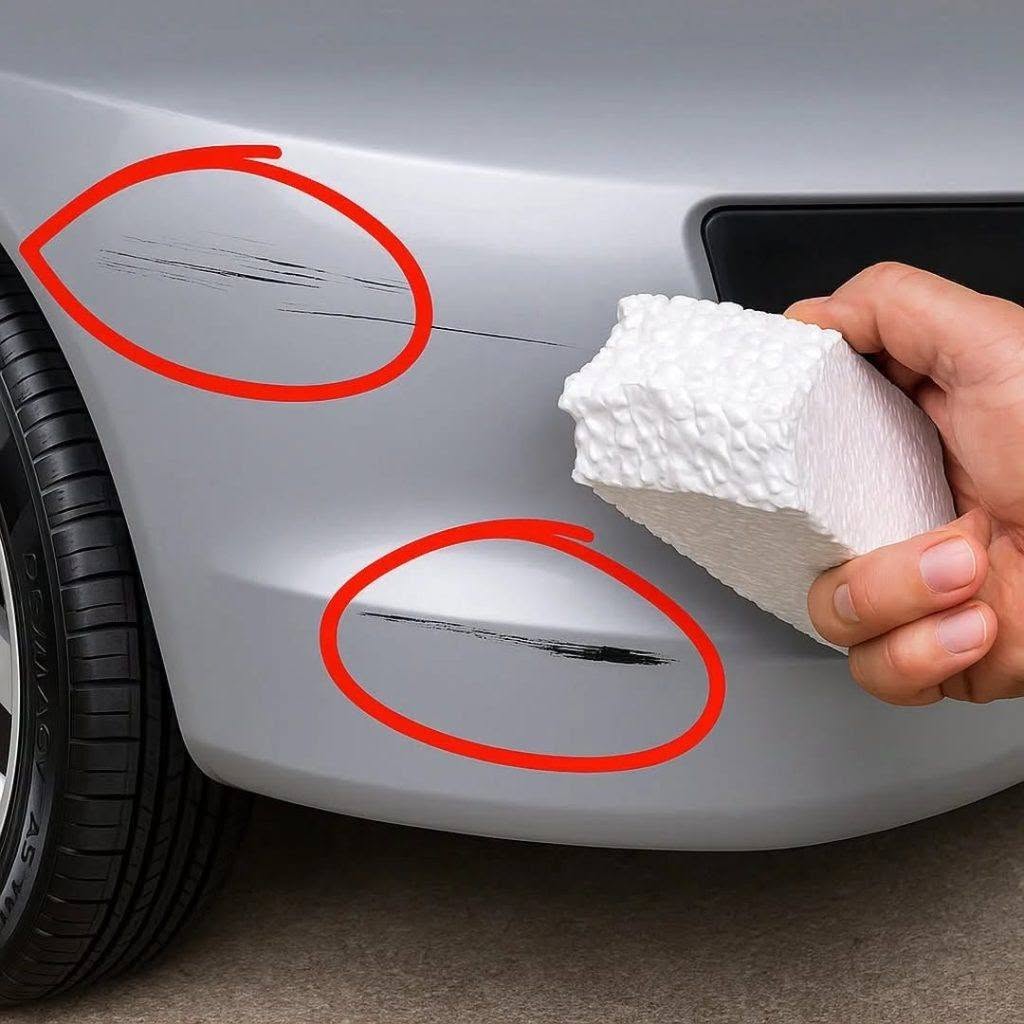
Scratches on a car body are one of the most common discomforts for any driver. Whether it’s rubbing with another vehicle in a parking lot, accidentally passing a key, tree branches, or even simple daily wear and tear, these marks end up affecting the aesthetics of the vehicle and, if they are not treated in time, can lead to major problems like oxidation. The good news is that there is a quick and cost-effective, in-house method to reduce or eliminate surface scratches without having to go to a specialist workshop.
Why do scratches appear and how to identify them?
Before we get into car painting, it’s important to understand what type of rayon we have. The body is made up of several layers: sheet metal, an anti-corrosive primer, the color layer and, above all, a layer of transparent varnish which protects the color and gives it luminosity.
Stripes are mainly classified into three types:
Surfaces: only affects the varnish layer. They are the most common and easiest to repair at home.
Media: they pass through the varnish and reach the colored layer. They require more work, but they can also be reduced.
Deep: they reach the primer or even the metal. In these cases, it is advisable to go to a professional.
To know if a scratch is superficial, simply run your nail over it: if it does not stick, it is a slight mark that can be corrected with the polishing foam method.
Materials needed
One of the great advantages of this technique is that it does not require expensive tools or advanced knowledge. The basic elements are:
CONTINUED ON THE NEXT PAGE.
